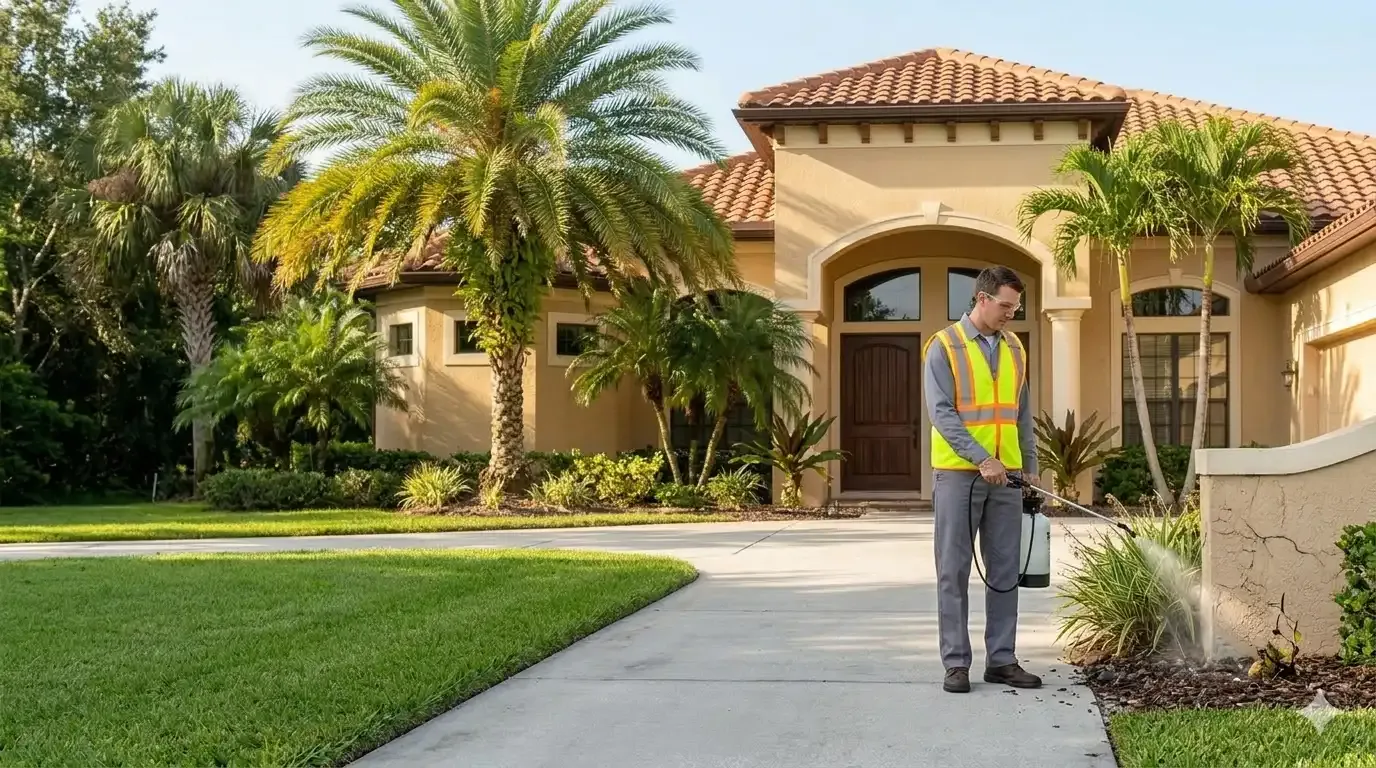
Why Florida has pests all year
Florida doesn't get the winter die-off that slows pests down in colder states. In Central Florida, pest activity carries on through every season.
- Subterranean termites stay active year-round
- Roof rats get in through rooflines and attic vents
- Cockroaches breed continuously in warm homes
- Mosquito season can last 8–9 months
Infestations grow fast in this climate, so catching a problem early and treating it professionally costs far less than waiting until the damage shows.
Florida's most common household pests
Cockroaches and palmetto bugs
The American cockroach, known locally as the palmetto bug, is the most common cockroach in Florida. It thrives in warm, humid conditions and gets in through gaps around doors, plumbing lines and utility openings.
German cockroaches are smaller and much harder to get rid of. A single female can produce hundreds of offspring in a few weeks, which is why store-bought sprays rarely solve the problem.
Signs to look for
- Droppings that look like black pepper
- Egg cases in dark corners
- A musty smell
- Roaches out in daylight, a sign of a heavy infestation
Subterranean termites
Florida has some of the highest termite pressure in the US. Subterranean termites, including the destructive Formosan species, travel through mud tubes and can damage structural wood for months before anything shows.
By the time most homeowners notice, the damage is already significant.
Signs to look for
- Mud tubes on exterior walls or foundations
- Wood that sounds hollow when tapped
- Discarded wings near windows and doors
- Bubbling or blistering paint
Seeing signs of termites?
Termite damage gets worse every week it goes untreated. Call to be connected with a licensed termite specialist.
Roof rats and house mice
Roof rats are common in Central Florida. They are agile climbers that get in through rooflines and attic vents, then chew through wiring, insulation, pipes and stored food. Chewed wiring is a real fire risk.
Infestations grow quickly and are hard to clear without professional exclusion and baiting.
Signs to look for
- Scratching or scurrying in ceilings or walls at night
- Gnaw marks on wood or wiring
- Droppings along walls or in the attic
- Greasy rub marks along baseboards
Hearing scratching at night?
Roof rats chew through wiring. Call to be connected with a licensed rodent control professional.
Fire ants
Fire ants are invasive and established in lawns across Florida. Mounds pop up quickly after rain, and stings are a real risk for children, pets and anyone with allergies.
DIY treatments often scatter a colony instead of killing it. Professional treatment targets the queen.
Mosquitoes
Wetlands and warm weather bring heavy mosquito pressure from spring through late fall. Florida mosquitoes can carry West Nile virus and Eastern equine encephalitis.
Professional yard treatments and removing standing water can sharply reduce the numbers around your home.
Widow spiders
Most Florida spiders are harmless. Southern black widows and brown widows are the ones to take seriously. Both like dark, undisturbed places such as garages, sheds, attics and storage boxes.
Lots of spiders indoors usually means there are plenty of other insects for them to eat.
Ghost ants, crazy ants and carpenter ants
Ghost ants are tiny and hard to trace. Caribbean crazy ants swarm in large numbers and can get into electronics. Carpenter ants tunnel through wood and cause damage over time.
Each species needs a different treatment, and misidentifying them is why so much DIY effort fails.
Ants keep coming back?
A licensed pro can identify the species and treat the colony itself.
What's active each season
No season in Central Florida is pest-free. Here's what to expect and when.
Spring Mar–May
Most active: Termite swarms, fire ants, ghost ants
Swarm season, the most important time to inspect for termites.
Summer Jun–Aug
Most active: Mosquitoes, cockroaches, rodents, spiders
Heat drives pests indoors looking for water and cool air.
Fall Sep–Nov
Most active: Rodents, fire ants, German cockroaches
Rodents look for shelter as nights get cooler.
Winter Dec–Feb
Most active: German cockroaches, silverfish, ants
Indoor pests thrive in climate-controlled homes.
When to call a professional
Trying DIY first makes sense. Call a licensed pro if any of these apply:
- You keep seeing the same pest after store-bought treatments
- You've found signs of termites, rodents or carpenter ants in the structure
- Children, pets or anyone with allergies live in the home
- The problem is spreading to more rooms
- You're buying, selling or renting out the property
- You've seen a widow spider in the home
Our connection line is for property owners or authorized decision makers in Central Florida.
Find pest control help in your area
Pick your area for local pest information and a direct line to licensed professionals who work there.
Questions about pest control in Florida
How much does pest control cost in Florida?
It depends on the pest, the size of your home and the treatment. A one-time general treatment commonly runs $100–$300. Recurring monthly or quarterly plans are often better value in Florida because pests are active all year. Termite treatment is priced separately and varies widely.
Is pest control needed year-round in Florida?
Yes. There's no winter die-off like in colder states, so ongoing prevention is usually cheaper than waiting for an infestation to take hold.
Are treatments safe for children and pets?
Licensed professionals use products and methods designed to limit exposure. Re-entry times vary by treatment, so tell the provider about children, pets and any sensitivities.
How quickly can a professional come out?
It depends on your location and provider schedules. Many Central Florida providers offer same-day or next-day service for urgent problems.
How do I know if I have termites?
Look for discarded wings near windows or doors, mud tubes along the foundation and wood that sounds hollow. Because damage is often hidden, many homeowners book an annual inspection even without obvious signs.
What's the difference between a one-time treatment and a recurring plan?
A one-time visit treats an active problem. A recurring plan, usually monthly or quarterly, maintains treatment barriers and monitoring to prevent new infestations.
How long does a visit take?
Most general pest visits take 30–90 minutes depending on the size of the home. Termite inspections and specialized treatments take longer.
Does homeowners insurance cover termite damage in Florida?
Usually not. Termite damage is generally treated as a maintenance issue rather than sudden accidental damage. Some providers offer separate termite warranties, so ask when you're connected.
Local Service Assist is a call connection service operated by DDQS Group. We don't perform pest control. All services are provided by independent, licensed third-party providers, who set pricing, availability, treatment methods and outcomes. Calls may be monitored or recorded for quality and compliance.