Seeing a swarm right now?
An indoor swarm usually means an active colony is already inside your home. Get it inspected soon.
Florida's warm, humid climate is ideal for termites. During swarm season, winged reproductives leave mature colonies to start new ones, and sometimes that new colony is already in your walls. Here's what Central Florida homeowners need to know to act fast.
What is termite season in Florida?
Termite season is when mature colonies release winged reproductives, called swarmers, to start new colonies. A swarm doesn't mean termites just arrived. It usually means a colony has been there for years and is now expanding.
Why Florida's climate suits termites
Warm temperatures, high humidity and frequent rain create ideal conditions for termites to survive and reproduce. In northern states termite activity really is seasonal. In Florida, and especially around Orlando, Kissimmee and Oviedo, the risk is close to year-round.
Florida swarm calendar
- February–May: peak swarm season for subterranean termites
- April–July: drywood termite activity picks up
- After heavy rain: indoor swarms can happen almost any time
When do termites swarm in Florida?
Timing depends on the species and local conditions. The three most common species in Central Florida each follow a different pattern.
February–April
Eastern subterranean
Daytime swarms on warm, humid days, usually after rain. The most widespread species in the region.
April–June
Formosan subterranean
Evening swarms near lights. Larger, more aggressive colonies and among the most destructive termites in the world.
April–July
Drywood
Late afternoon or early evening swarms. They infest wood directly without touching soil, often in attics, window frames and furniture.
Orlando tip: swarms here often come in the early evening after afternoon thunderstorms, especially in spring. Lots of winged insects near windows or lights should never be brushed off.
Why Central Florida is high risk
Orlando-area homes face higher termite risk because of a combination of soil, climate and species that few other places share.
Sandy soil and rain
Orlando's sandy soil drains quickly but holds enough moisture below the surface to support large subterranean colonies. With frequent rain, colonies can grow unnoticed for years before anything shows above ground.
Three damaging species
- Eastern subterranean termites: the most widespread; build mud tubes from soil to wood
- Formosan subterranean termites: very large, aggressive colonies; serious structural risk
- Drywood termites: infest wood directly; common in attics and window frames
Because each swarms at a different time, Central Florida homes face overlapping risk from February through July.
What a swarm means for your home
Swarm outside, near the house
A colony is probably nearby and may already be targeting your home. Book an inspection soon rather than waiting for one indoors.
Swarm indoors
There's a high chance termites are already inside your walls, floors or ceiling. Treat it as a likely infestation until a professional says otherwise.
Colonies only swarm once they're mature, which typically takes 3–5 years. So by the time you see winged termites indoors, damage may already be underway.
Seeing signs of termites? Damage gets worse every week without treatment.
(321) 334-3980Termites vs. flying ants
Swarmers are misidentified all the time. Here's how to tell them apart.
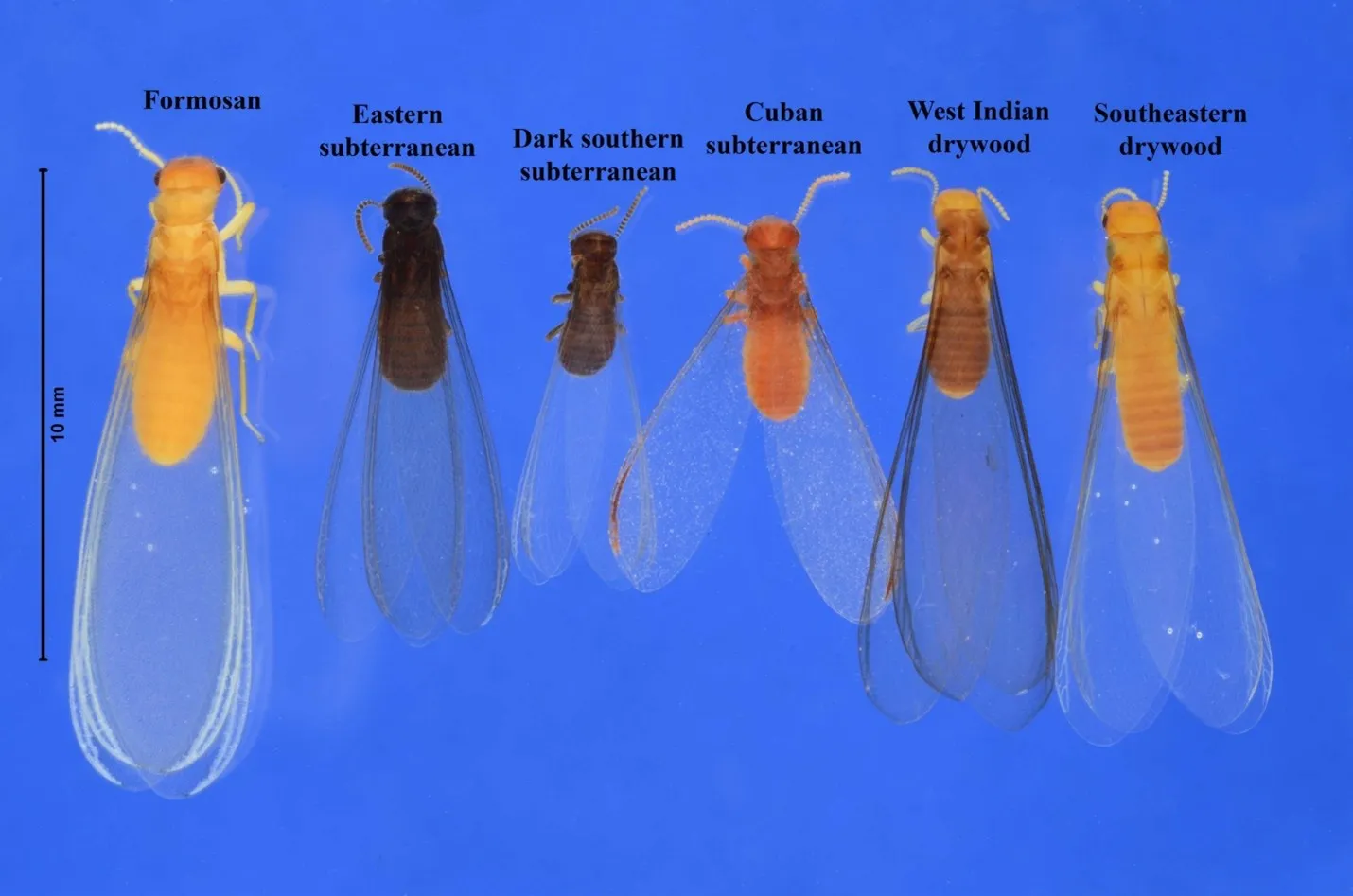
Termite swarmer
- Two pairs of wings the same length
- Straight, thick waist
- Straight antennae
- Pale or cream-colored body
Flying ant
- Front wings longer than back wings
- Pinched, narrow waist
- Bent, elbowed antennae
- Darker body
When in doubt, don't guess. Put a few in a sealed bag and have a licensed professional identify them. You can also try our pest identifier.
What to do right after a swarm
Stay calm
A swarm is alarming, but you still have time to act. Panic leads to choices like reaching for bug spray.
Document it
Photograph where the swarmers appeared and collect a few in a sealed bag. Note the time, weather and exact spot. This helps a pro identify the species and find the colony.
Skip the DIY spray
Store-bought sprays kill the swarmers you can see but don't touch the colony. They can push it deeper into the structure, making treatment harder and more expensive.
Call a licensed professional
Aim for a same-day inspection. A licensed technician will identify the species, assess the infestation and recommend treatment.
Find a pest control pro through our Orlando pest control page or the Central Florida pest guide.
How fast can termites damage a home?
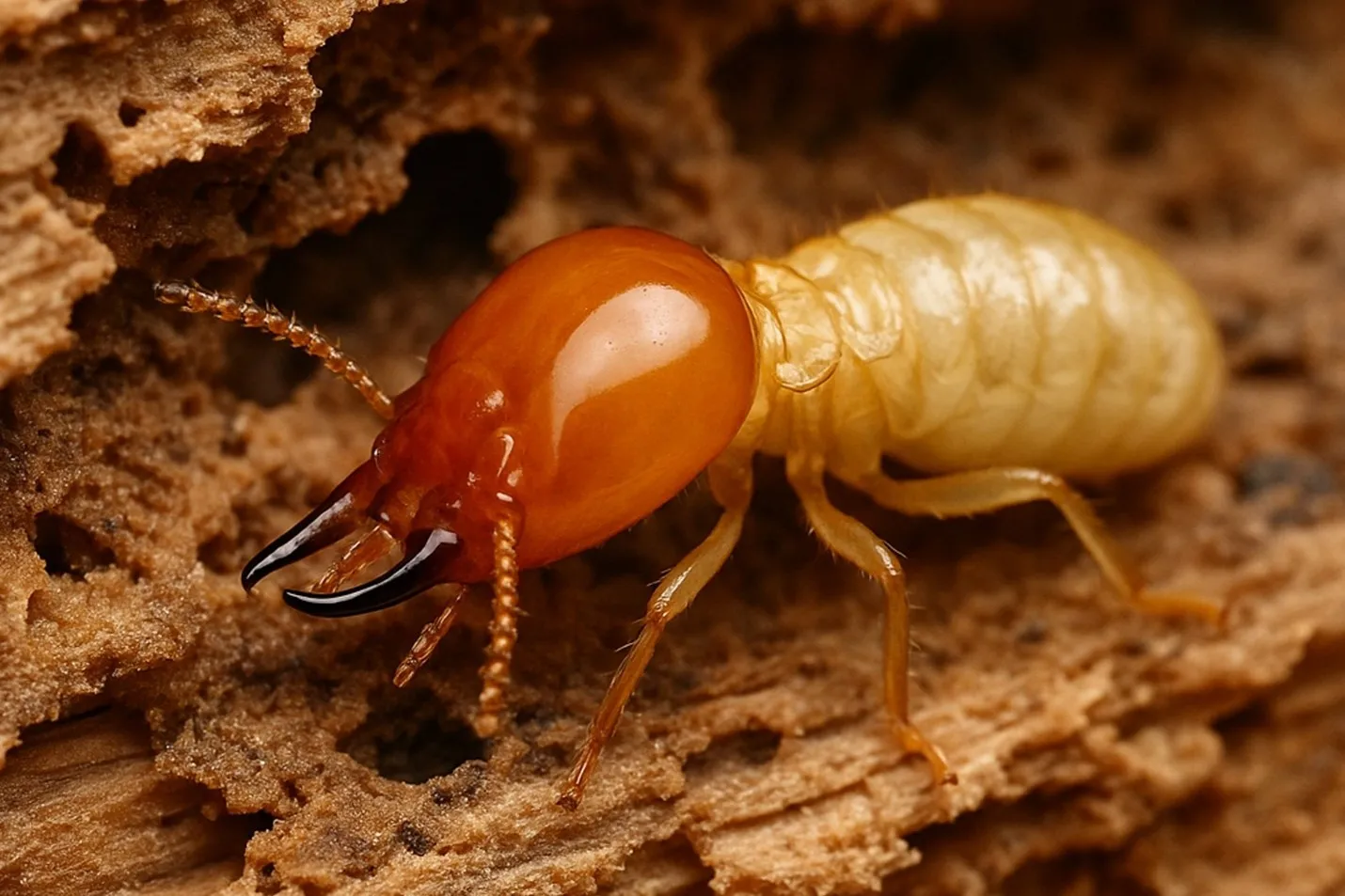
Termites feed around the clock, with no dormant period. They commonly go after:
- Floor joists and subfloor
- Wall studs and framing
- Support beams
- Roof framing and rafters
A mature Formosan colony can consume a meaningful amount of structural wood each year, all of it hidden inside walls, floors and framing. By the time damage is visible, structural integrity may already be affected. Seeing a swarm and doing nothing is never safe.
Professional treatment options
The right treatment depends on the species and how severe the infestation is. A licensed technician recommends an approach after inspecting.
Liquid barrier
Termiticide is applied to the soil around and under the foundation, creating a continuous barrier. Fast and effective against subterranean species.
Baiting systems
In-ground stations around the property. Workers carry slow-acting bait back to the colony and gradually eliminate it. Less chemical exposure, good for long-term monitoring.
Spot treatment
For localized drywood infestations. The technician drills into infested wood and injects termiticide directly. Best for small, contained problems.
For detailed species information, see the University of Florida Entomology Department.
Ready to get treatment scheduled? Get connected with a termite specialist in Central Florida.
(321) 334-3980Preventing future swarms
Control moisture
Fix plumbing leaks quickly, make sure drainage carries water away from the foundation, and use dehumidifiers in crawl spaces and attics. Moisture attracts termites more than almost anything else.
Break wood-to-soil contact
Keep mulch several inches from the foundation, set wooden deck posts on concrete footings, and never stack firewood against the house.
Get an annual inspection
A yearly termite inspection is the most effective prevention for Florida homeowners. Many infestations are caught before serious damage, which saves thousands in repairs.
Questions about termite season in Florida
When do termites swarm most often in Florida?
Most swarms happen between February and May. Drywood termites can keep swarming through July, and swarms after heavy rain can happen at almost any time of year.
Is termite season in Orlando worse than elsewhere in Florida?
Central Florida's sandy soil, high humidity and year-round warmth make it more vulnerable than North Florida, and far more than most northern states.
Does a swarm mean I already have an infestation?
Often, yes. An indoor swarm usually points to an active colony inside the structure, though swarmers can occasionally get in from outside. A professional inspection is the only way to know. An outdoor swarm near the house means a colony is close by and your home may be a target.
How long does termite season last in Florida?
Peak activity runs February through July, but termites stay active all year in Florida's climate.
Can I treat termites myself?
Store-bought products rarely eliminate the whole colony and can drive it deeper into the structure. A licensed professional is strongly recommended for any confirmed or suspected infestation.
How quickly should I call after seeing a swarm?
Right away. The sooner a professional assesses it, the better the chance of containing the colony before more damage happens. Many Central Florida providers offer same-day service for termite problems.
Does homeowners insurance cover termite damage in Florida?
Usually not. It's generally treated as a maintenance issue rather than sudden accidental damage. Some providers offer separate treatment warranties, so ask when you're connected.
What's the difference between subterranean and drywood termites?
Subterranean termites live underground and reach wood through mud tubes, so they need soil contact. Drywood termites live entirely inside the wood they infest and are often found in attics, furniture and window frames. Each needs a different treatment.
Local Service Assist is a connection service. We connect you with independent pest control providers and don't perform pest control ourselves.